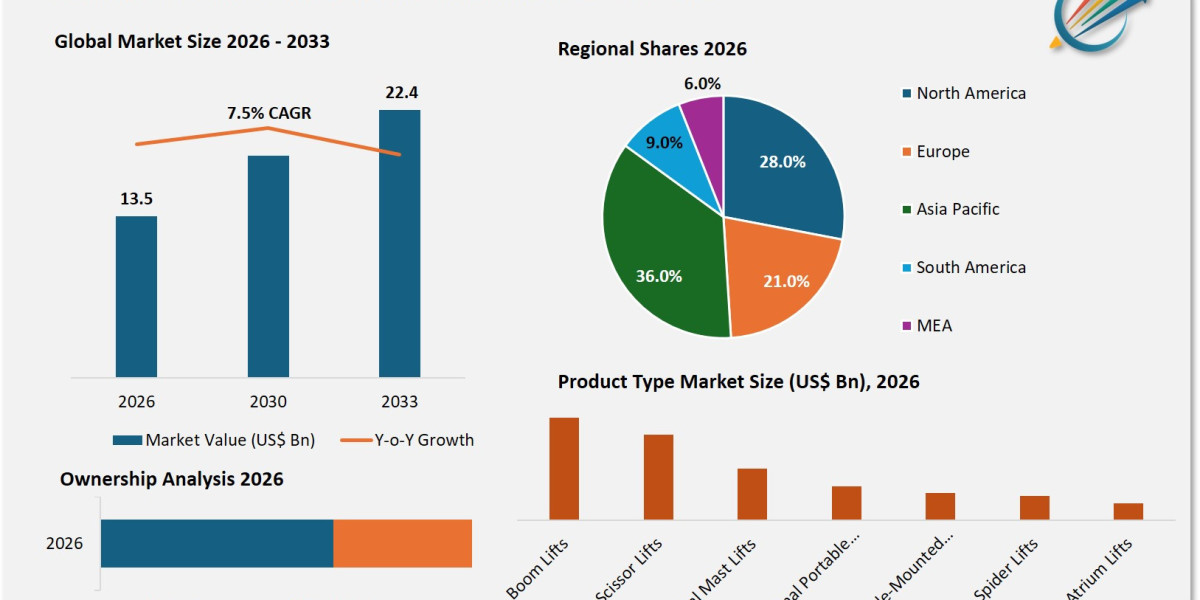

The global aerial work platforms market is positioned for robust expansion, with Market Minds Advisory projecting growth from USD 13.5 billion in 2026 to USD 22.4 billion by 2033. This trajectory is underpinned by increasing demand for safe and efficient access solutions across construction, maintenance, and industrial sectors. Core technologies such as advanced hydraulics, telematics integration, and electric-powered platforms are enhancing operational efficiency and safety, aligning with evolving regulatory requirements.
Structural transformation is evident as stricter safety mandates and labor regulations accelerate equipment upgrades and fleet modernization. The market’s strategic relevance is amplified by its role in supporting large-scale infrastructure projects, urban development, and the ongoing shift towards sustainable and automated solutions. As end-users prioritize productivity and compliance, aerial work platforms are becoming integral to operational workflows across multiple industries.
Browse the Complete Research Report: https://tinyurl.com/3m9c64bc
Key Takeaways from Aerial Work Platforms Market
- The aerial work platforms market is forecast to expand at a CAGR of 7.5% through 2033.
- Electrification and telematics integration are reshaping product innovation.
- Regulatory tightening on worksite safety is accelerating equipment replacement cycles.
- Urbanization and infrastructure investment are primary demand drivers.
- Rental companies are increasing their share due to flexible service models.
- Asia Pacific is emerging as a high-growth region, led by construction activity.
- Sustainability concerns are prompting greater adoption of electric and hybrid platforms.
Aerial Work Platforms Market Trends
The aerial work platforms market is currently shaped by rapid technological advancements, particularly in electrification and digital fleet management. Manufacturers are investing in smart features such as real-time diagnostics and remote monitoring, which enhance safety and reduce downtime. These innovations are increasingly valued by rental operators and end-users seeking to optimize asset utilization.
Simultaneously, the market is witnessing a shift in procurement patterns, with rental and leasing models gaining traction over outright ownership. This trend is driven by cost optimization, regulatory compliance needs, and the desire for access to the latest equipment. As a result, service-oriented business models are becoming more prominent across the industry landscape.
Need tailored insights? Request for a customization report: https://tinyurl.com/2ajhmvv3
Drivers, Opportunities & Restraints
Construction Boom and Safety Regulations Fuel Demand
A primary catalyst for the aerial work platforms market is the global surge in construction activity, particularly in emerging economies. Urbanization, infrastructure renewal, and industrial expansion are generating sustained demand for safe, efficient elevated access solutions. Concurrently, tightening occupational safety regulations are compelling contractors and facility managers to upgrade to compliant, modern equipment. This dual dynamic is reinforcing the market’s growth trajectory and embedding aerial work platforms as essential assets in project execution.
Electrification and Digitalization Unlock New Value Pools
Emerging technologies are opening new avenues for value creation within the aerial work platforms market. The shift toward electric and hybrid platforms is addressing sustainability targets and reducing operational costs, while digitalization is enabling predictive maintenance and enhanced fleet management. These developments are particularly attractive to rental operators and large-scale end-users seeking to maximize uptime and minimize lifecycle expenses. As technology adoption accelerates, manufacturers and service providers can leverage these trends to differentiate offerings and capture new customer segments.
High Upfront Costs and Skills Gap Impede Adoption
Despite positive growth drivers, the market faces notable restraints. High initial investment requirements for advanced aerial work platforms can deter small and medium-sized enterprises, particularly in cost-sensitive regions. Additionally, a shortage of skilled operators and maintenance personnel can limit the effective deployment and safe operation of technologically advanced equipment. Addressing these barriers through financing solutions and targeted training programs will be critical for broader market penetration.
Aerial Work Platforms Market Segmentation
- Boom Lifts
- Scissor Lifts
- Vertical Mast Lifts
- Personal Portable Lifts
- VehicleMounted Platforms
- Spider Lifts
- Atrium Lifts
- Electric
- Diesel
- Hybrid
- Gasoline
- Less than 20 Feet
- 2050 Feet
- 50100 Feet
- Above 100 Feet
- Construction
- Utilities
- Transportation & Logistics
- Warehousing
- Oil & Gas
- Manufacturing
- Facility Management
- Rental
- Direct Purchase
- North America (U.S., Canada and Mexico)
- Europe (UK, France, Germany, Italy, Spain, Poland, BENELUX, Nordics and Rest of Europe)
- Asia Pacific (China, India, Japan, South Korea, ANZ, ASEAN and Rest of Asia-Pacific)
- South America (Brazil, Argentina and Rest of South America)
- MEA (Turkiye, GCC Countries, South Africa and Rest of MEA)
Aerial Work Platforms Market Regional Analysis
Asia Pacific is anticipated to register the fastest growth, driven by accelerated urbanization and infrastructure investments in China, India, and Southeast Asia. North America and Europe remain mature markets, with demand supported by regulatory compliance and fleet upgrades, while the Middle East and Latin America present selective opportunities linked to construction and industrial projects.
The aerial work platforms market is characterized by a mix of established manufacturers and regional players, with competition centered on product innovation, safety features, and aftersales support. Market participants are increasingly focused on expanding rental fleets, integrating digital technologies, and developing eco-friendly platforms to address evolving customer requirements. Strategic partnerships and geographic expansion are also shaping competitive dynamics, as companies seek to capture growth in emerging markets and adapt to shifting regulatory landscapes.